
The Greatest Generation (GI Generation): Born 1901–1927
The final third of the 19th century include:
- post-Civil War reconstruction
- economic transition from an agrarian to industrial society
- germ theory knowledge modernizing medicine
- The United States embracing an outward orientation towards foreign affairs
The Greatest Generation begins at the start of the 20th century. From 1899 – 1901, the United States was embroiled in the Philippine-American War. The US moved from neutral at the start of World War I in 1914 to Allied Forces by 1917. Industrial consolidation in steel, oil, and railroads, begun in the late 19th century, continued. Urbanization accelerated. Unions and antitrust forces attempted to quell the Gilded age by countering robber barons and improving labor practices. The federal income tax was enacted in 1914 and paved the way for reducing tariffs to promote more international trade.
While schooling had been required since the 1850s in many states, attendance was not compulsory in all states until 1918. Historians credit this development to the confluence of child developmental advocates, labor unions, nativistic forces, and concessions made with farmers about harvesting season.
Direct voting for Senators as well as granting women the voting franchise point to growing rights for many citizens. At the same time, Jim Crow and lynching in the South spurred the Great Migration. From 1915 to 1970, the African American population went from being 90% in the South to 50% in the North.
Other milestone moments during this era include:
- The Wright Brother’s first flight
- The Birth of a Nation movie as well as Lost Cause Revisionism
- The Roaring Twenties, the Jazz Age and a booming stock market
- Prohibition
- The Scopes Trial
- The League of Nations was the precursor to the United Nations
Overall, the United States reflected both conservative as well as progressive initiatives, vacillating from religious to secular impulses.
The Silent Generation: Born 1928–1945
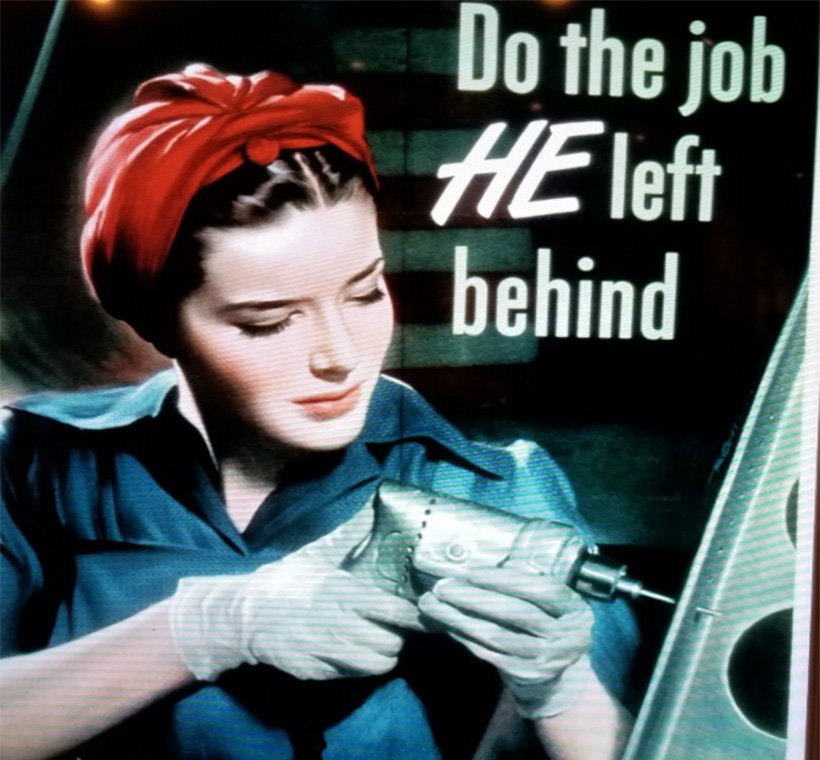
The Great Depression (1929) and the end of World War II serve as bookends to the birth years of the Silent Generation.
Other important events:
- The Dust Bowl
- Eliot Ness, Al Capone conviction on tax fraud and sentenced to Alcatraz
- Prohibition repealed and semi-automatic weapons curbed
- The New Deal
- Social Security
- Fair Labor Standards
- Wartime surge of women participation in the labor force
- World War II
- The 1942 Stabilization Act froze wages to tamp inflation
- Companies offer benefits, especially healthcare, in lieu of wage increases
- Federal-Aid Highway Act of 1944
In retrospect, this era featured more examples of the government pursuing options meant to effectively address large-scale, societal problems. For example, in the mid 1930s, 90% of senior citizens were destitute due to failing to save, no longer being able to work, and urbanization resulting in families being more dispersed. Social security passed; today fewer than 10% of seniors are desperately poor. At the same time, the filibuster was used by Southern politicians to thwart federal adoption of anti-lynching laws numerous times in the 1920s and 1930s.
With the development of mass media and mass communications, propaganda could derail efforts or rally them. In the mid 1930s, the movement to enact national healthcare was subverted by labeling it “Germanic”. The term Judeo-Christian expanded beyond its theological roots to a political tool to counter antisemitism. The continual turning away of the MS St. Louis Ocean Liner of Jewish refugees prompted the need to increase empathy and support for Jewish victims of pogroms.
Baby Boom Generation: Born 1946–1964
The formation of the Central Intelligence Agency (1947) and the passage of the Civil Rights Act (1964) are important events marking the beginning and ending of the birth years of the Baby Boom Generation.
Other milestones:
- Marshall Plan to rebuild Europe
- Truman Doctrine to battle communism
- The Korean War
- Federal-Aid Highway Act
- McCarthyism
- The Space Race
- Brown versus Board of Education
- Montgomery Bus Boycott
- The Cuban Missile Crisis
- The Gulf of Tonkin Incident
The post-World War II baby boom implied many demographic changes. The GI Bill was instrumental in promoting middle-class growth. Meanwhile redlining and other forms of discrimination added hurdles to African Americans benefitting from such programs. Investment in NASA and the interstate highway affirmed optimism about the future. Rock & roll and hippies implied greater social freedoms while the Red Scare and government tactics suppressed freedoms. The Cold War permeated many policy decisions while initially clandestine activities in Viet Nam developed into open fissures between the government and citizens about war, conscription, patriotism and foreign policy.
Generation X: Born 1965–1980
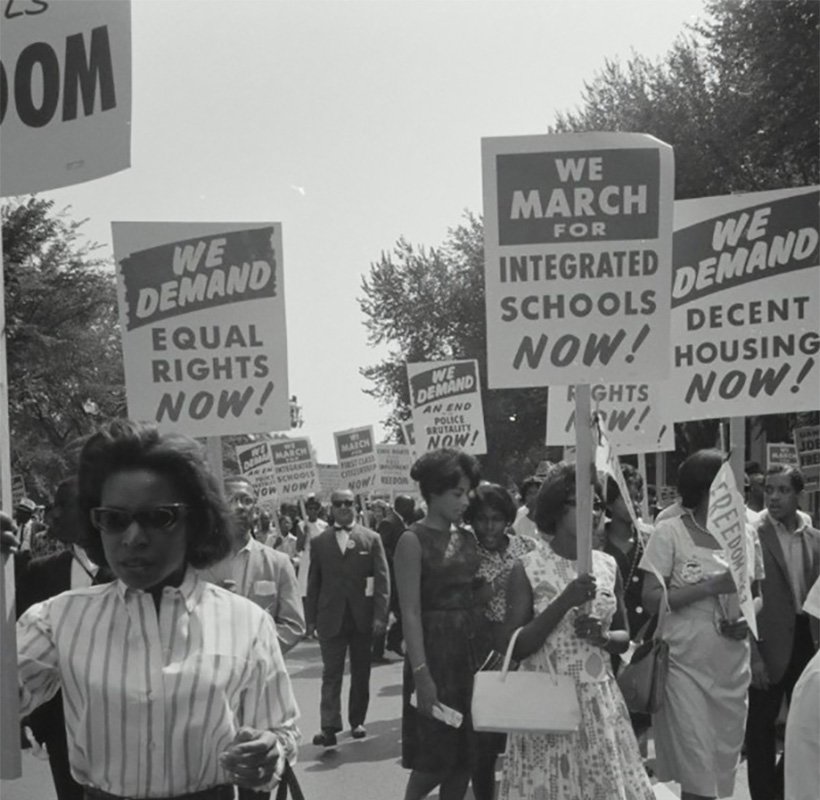
The Voting Rights Act and Medicare heralded the beginning of Gen X. Inflation exceeding 13% while unemployment approached 8% were economic woes marking the ending years of Generation X births.
The Civil Rights movement as well as antiwar sentiments laid bare stark differences between wide swarths of citizens. In Japan and Europe, the ravages of World War II were significantly repaired. Profligate Cold War spending and militaristic activities like the Vietnam War drained gold reserves and forced the U.S. to abandon the Bretton Wood gold standard ushering inflation scarcely experienced in decades. Mass incarceration and the war on drugs have been referred to as both a return to “law and order” as well as a shameless tool to mute political dissent. Arab countries demanding more control and higher pricing for oil rippled through overall pricing since energy is both a factor of production and an end product. In other words, the US economic hegemony of the 50s and 60s was receding at the same time more citizens demanded fairer distribution in jobs and rights.
- Voting Rights Act
- Medicare
- Assassination of Martin Luther King
- Woodstock
- Tet Offensive
- The start of mass incarceration
- Apollo 11 Mission and Moon Landing
- Roe V Wade
- Bretton Wood Collapse
- Nixon’s visit to China
- Oil shock and energy crisis
- Stagflation
- Iran Hostage Conflict
Millennial Generation or Generation Y: Born 1981–1996
This era began with economic woes and mortal health threats. It ended with massive corporate consolidations. In the middle, “greed is good” as well as “the government is your enemy” became widely held beliefs by many.
- Reaganomics
- AIDS
- MTV
- Personal computer proliferation
- Sandra Day O’Connor Supreme Court appointment
- Iran-Contra
- Corporate Restructuring and the disappearance of the 25-year silver watch gift
- Tearing down the Berlin Wall
- First Persian Gulf War
- Soviet Union Collapse
- NAFTA
- Telecommunication Act of 1996
- Glass Steagall repeal
- Clintonian triangulation
- Oklahoma City bombing
The proliferation of cable channels and personal computers fractured the dominant mass media share of the big three networks. The first woman jurist, Sandra Day O’Connor, was appointed to the Supreme Court. The winding down of the Cold War hinted at a peace dividend which materialized in some ways but not in others. The firing of air traffic controllers followed by NAFTA enactment continued the evisceration of unions. Other legislation deregulated industry and allowed unchecked industrial concentration. The stock ownership concept of five stakeholders – workers, community, customers, suppliers, and owners – whittled down to the primacy of shareholders. Terrorism come to U.S. shores via events like the first World Trade Center bombing as well as the bombing of the Murray building in Oklahoma City.
Parenting continued adding more “styles”. Added to “Leave it to Beaver” were “free love”, “helicopter parents”, and the growing inclusion of families beyond the heretofore dominant “hetero-normal”.
Generation Z: Born 1997–2010
The tail end of the Clinton presidency witnessed massive corporate consolidations as well as capital chasing cheaper labor worldwide. Radicalization manifested in teenagers with the first of many school or mass shootings. A closely contested Presidential election was adjudicated by the Supreme Court, reflecting growing polarization in the electorate and increasingly “winner takes all” brass knuckles by both parties. The 9/11 airplane hijacking convinced Americans to trade privacy for security, ushering the NSA, DHS and mass surveillance. Iraq was invaded under the pretext of weapons of mass destruction, despite doctored proof as well as no hijackers being from that country. Hurricane Katrina exposed the dangers of compromised infrastructure coupled with a skeptical approach to climate change. Social media, search engines, and online shopping, all accessible via a handheld smartphone, begin supplanting real world interactions, books of knowledge and physical retail.
Financiers go beyond their focus on mergers and acquisitions to chase fee income via increasingly speculative loan instruments. The toxic qualities of CDOs (collateralized debt obligations) threaten to collapse global banks that are “too large to fail”. The federal reserve bails out the banks via quantitative easing while leaving underwater homeowners to fend for themselves. Obamacare prohibits discrimination against pre-existing conditions and requires that insurance companies spend at least 80% of collected premiums to cover medical expenses. Runaway healthcare costs fueled by needless administration of multiple payers as well as “your money or your life” pricing not addressed at all. The Supreme Court rules that Citizens United is “corporate” free speech; therefore, corporate campaign donations can be unlimited.
- Columbine High School shooting
- Bush vs Gore
- 9/11
- War on Terror, mass surveillance and the Department of Homeland Security
- Iraq
- Afghanistan
- Hurricane Katrina
- Amazon, Google, Facebook
- Apple iPhone
- Subprime mortgages and the Great Recession
- Quantitative Easing
- Obamacare
- Citizens United
Generation Alpha: Born 2010-2024

The continued fracturing of mass audiences while talking heads fight on cable news quibbling over alternative facts and rejecting “so-called” experts lead to differences in opinion being fueled by fundamental disagreements on the facts. Increased access to information via smartphones implies a democratization of knowledge, but algorithms reinforce personal beliefs in further isolating individuals. Mass collection of personalized data leads to tech giants growing in value without compensation to individuals from whom the value is derived. Weather events become more frequent and more extreme with failing infrastructure unable to weather the impacts.
On the political front, the two parties overlap in more areas, pursuing the agenda of large corporations and the 1% with continued tax breaks (estate tax) while ignoring the concerns of constituents such as campaign finance reform (72%), gun safety (63%), increased minimum wage (80%), or national healthcare (range from 60% to 95%). Top politicians continue to be octogenarians or from political dynasties. Increased familial laws for same-sex families as well as further recognition of dysfunctional sexual abuse in corporate and social settings offset by increasing demonization of transgender or other marginalized communities.
A global pandemic prompts “shelter-in-place” directives. Public police suffocations, January 6th riot, anger over Covid masks manifest in massive demonstrations and citizens taking it to the street.
- Smartphones
- Hurricane Sandy
- Boston Marathon
- Bernie Sanders, Hillary Clinton, Donald Trump, Joe Biden, Kamala Harris
- Same sex legalization
- #MeToo
- Streaming services
- Covid 19
- George Floyd and Black Lives Matter
- Roe v Wade overturned
Members of the past two generations have grown up with the Internet and social media. Personal activities are posted for public consumption; connections are both wider and fewer, and individuals have experienced remote working and remote learning.
Generation Beta: Born 2025-2039
At the start of Generation Beta, AI is all the talk on the technology front. The top five companies have a market capitalization between $2.3 (AMZN) and $4.4 (NVDA) trillion. On the political front, ICE, tariffs, Project 2025, Israel and the Ukraine command most of the attention. What’s next? Only time will tell.
Sandwich Generation: Born Anytime, About 40+ to 60 something
The Sandwich Generation is not of a single generation. Rather, it is a period of a decade or two when a family has to be a caretaker to both dependent children and senior parents. With the rapid increase in education and healthcare costs, these families need better information to face the triple burdens implied by this dynamic. This site aims to provide information and professionals to navigate these realities.